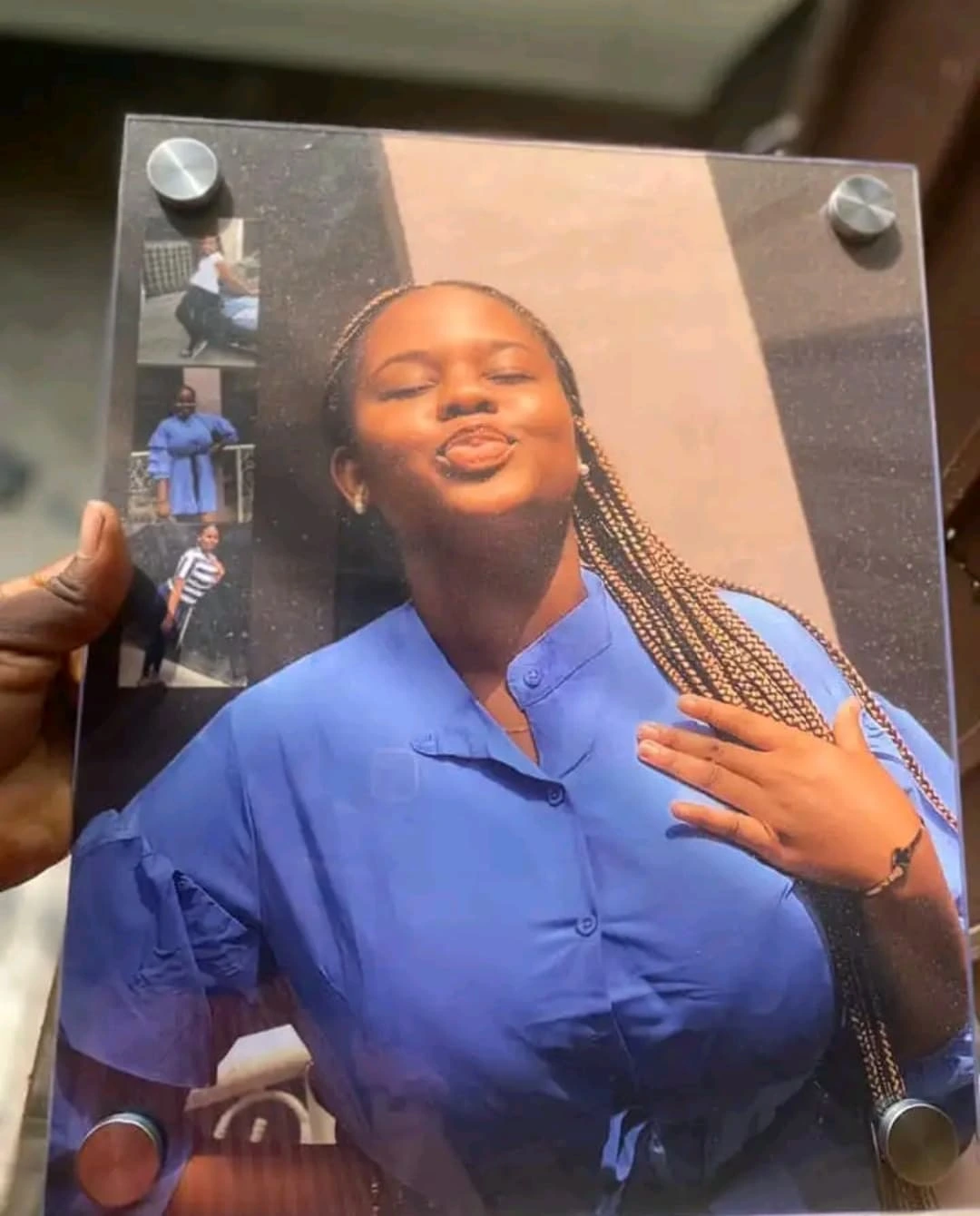
The first time I tried to hang an acrylic frame, I overtightened the standoff cap and heard that sound, a faint, dry pop, as a hairline crack ran from the corner. The frame was a 50x70cm print. It had cost me real money. And it cracked because nobody told me the one thing that actually matters with acrylic: finger-tight is tight enough.
That was my expensive lesson. This is yours for free.
Most guides that show up when you search how to hang an acrylic frame on the wall are written by people who have clearly never touched one. They tell you to “use a spirit level” and “mark the wall with a pencil” as if that is the part people struggle with. It is not. The part people struggle with is the wall itself, especially in Nigeria, where most homes are built with sandcrete hollow blocks rendered in cement plaster, not the drywall that every American tutorial assumes you are dealing with.
So this guide is written for that wall. The Nigerian wall. The one a regular nail barely scratches.
“The frame is not the problem. The wall is where everything goes wrong.”
Before you touch the wall, understand what your frame actually is
Acrylic frames in Nigeria come in two completely different forms, and they do not hang the same way. Confusing them is how frames fall.
The first type is what sellers on Jiji and Jumia call a “luxury crystal wall art” or “stoned acrylic frame”, a decorative panel printed on acrylic, sometimes with rhinestones or LED edges, usually sold in sizes from 30x40cm up to 80x100cm. These are the ones you see for between N8,000 and N200,000 depending on size. They typically come with a wire or D-ring hanger pre-attached at the back and a steel or aluminium outer frame.
The second type is the frameless acrylic print, a flat sheet of clear acrylic with your photo or artwork printed behind it, no border, no edges, just the image and the material. Places like Acrylic Frame Nigeria, iPrints Nigeria and Branda Nigeria produce these. They come either with a wire float mount, or with four pre-drilled corner holes for standoff bolts.
Know which one you have before reading another word. The hanging method for each is different.
Hanging a framed acrylic (the wire or D-ring type)
This is the more forgiving of the two. The aluminium or steel frame at the back gives it structural support, so a single point of contact with the wall, one screw, one rawl plug, can hold it reliably if done right.
Here is where most people get it wrong in Nigerian homes: they use a small nail. A nail in a rendered sandcrete wall will hold maybe 2kg before the plaster slowly gives. For anything larger than 40x40cm, you need a screw and a rawl plug, full stop.
01
Identify your wall layer
Tap the wall with your knuckle. A hollow sound means you have hit a cavity inside the sandcrete block. A dense, hard sound means solid block or the poured column between blocks. Always try to anchor into the solid block or column, not the hollow section. The hollow section can hold light items with a toggle anchor, but for frames above 3kg, find the solid part.
02
Drill with the right bit
You need a masonry drill bit, not a wood bit, not a regular metal bit. In Lagos, these are available at any hardware shop on Lagos Island, Allen Avenue, or Oshodi market. A 6mm masonry bit paired with a 6mm yellow rawl plug and a 4mm screw is the combination that works for most mid-weight frames. For frames above 5kg, move to 8mm.
03
Drill at low speed, without hammering if possible
A standard power drill on a concrete wall will get the job done, but it takes patience. Do not force it. If you have access to a hammer drill (locally called a “breaker drill”), use the rotation-only mode for the pilot hole, then switch to hammer mode if the wall is unusually hard. Forcing a drill bit at high speed on sandcrete plaster can cause the surface to crumble around the hole, which means your rawl plug will not grip.
04
Insert the rawl plug flush with the wall
It should sit tight, not wiggle. If it wiggles, the hole is too big. Fill it with a small amount of tile adhesive, let it set for 20 minutes, then re-drill at the correct size.
05
Drive the screw — leave a gap
Leave about 5mm of the screw head protruding from the wall. This is what the wire or D-ring will sit on. The frame will hang on that gap, not behind the screw head.
06
Hang and level
Hook the wire over the screw. Step back three metres and check the level. Your eye at close range will lie to you. Distance tells the truth. If it tilts, slightly adjust the wire position on the screw head — the wire gives you flexibility that standoffs do not.
One thing nobody tells you
If your wall has ceramic tiles, do not drill into the tile face unless you have a tile drill bit specifically. Drilling into a tile with a masonry bit will shatter the tile. Either drill into the grout line between tiles or use a heavy-duty adhesive hook rated above the frame’s weight.
Hanging a frameless acrylic print with standoff bolts
This is the one that damages frames. Not because it is complicated, but because people trust their hands too much at the final step.
Standoff bolts are small chrome or brushed-steel cylinders — a barrel that screws into the wall, and a cap that screws over the acrylic face to pin it in place. The cap is what people overtighten. Acrylic is not glass. It flexes slightly before it cracks. You will not feel resistance until it is too late. Finger-tight, then a half-turn with a coin. That is all.
Quick answer — how to hang acrylic frame on wall with standoffs
- Mark your four hole positions.
- Drill 6mm holes with a masonry bit.
- Insert rawl plugs.
- Screw in the standoff barrels, leaving them slightly proud of the wall.
- Align the pre-drilled corners of your acrylic print over the barrels.
- Place the washer, then hand-tighten the cap.
- Add a half-turn with a coin. Stop there.
The critical step before any of this is transferring your hole measurements accurately. The acrylic already has four corner holes drilled by the print shop. Measure the distance between those holes exactly, width and height, then transfer those measurements to your wall using a pencil and a spirit level. If your measurements are even 2mm off, one standoff will not align, and you will be tempted to force it. Do not. Unscrew everything and remeasure.
One thing that framers in Lagos who produce these prints consistently warn about: do not use the acrylic print as a template to mark the wall directly. People hold the print against the wall, poke a pencil through the holes, and assume the marks are accurate. They are not, because the print flexes slightly when held vertically. Measure off the print while it is flat on a table, then transfer to the wall.
The adhesive option — when it actually works and when it does not
If your frame is small — under 30x40cm and under 1.5kg — strong double-sided foam tape or no-nail adhesive strips can work on a smooth, painted wall.
The key word is smooth.
Nigerian walls that have been finished with texture paint, Artex, or rough sand-and-cement render do not give adhesive a clean surface to grip. The bond fails quietly over weeks, often dropping the frame at 2am.
If your wall is smooth and your frame is genuinely lightweight, the method that works is:
- Clean the wall with methylated spirit
- Let it dry fully
- Apply the adhesive
- Press the frame firmly for 60 seconds
- Leave it undisturbed for 24 hours before trusting it
Not 30 minutes. Not 2 hours. 24 hours.
For anything heavier, or any wall with texture, do not use adhesive. The rawl plug and screw method takes 15 minutes and holds for years. Adhesive that fails takes the paint with it and sometimes cracks the acrylic on impact.
The height question
Every Western guide says 57 inches from floor to frame centre, which is approximately 145cm. This is based on average eye level in gallery settings.
In a Nigerian home with 3-metre ceilings, which is standard for most detached houses and new apartment builds, this guideline holds reasonably well.
Where it breaks down is above furniture:
| Scenario | Recommended Placement |
|---|---|
| Standard wall | 145cm to frame centre |
| Above sofa | 20–25cm above sofa back |
If you are hanging above a sofa, the frame centre should sit 20–25cm above the sofa back, not at the 145cm standard, because the sofa itself raises the visual reference point.
The most honest advice: hold the frame against the wall at the height you think looks right. Take a photo with your phone. Look at the photo, not the frame. The camera flattens the room and shows you what a visitor will see. Trust the photo over your instinct.
What to do when one standoff does not align
It happens. You measured correctly, drilled accurately, and still one corner is 3mm off.
The temptation is to angle the acrylic slightly to force it onto the barrel. Do not. Angling the acrylic puts uneven stress on the material around the pre-drilled hole, and over time, sometimes immediately, it cracks from that point outward.
The fix is simple:
- Unscrew the misaligned barrel
- Plug the hole with a small amount of wall filler
- Let it set
- Re-drill at the correct position
- Re-insert
It costs 20 extra minutes. A replacement print costs far more.
Where to get the right hardware in Nigeria
Most print shops that produce acrylic frames in Lagos, including iPrints on Lagos Island and Branda Nigeria, supply standoff bolts with the print.
If yours did not come with hardware, or if you need rawl plugs, masonry bits, or heavy-duty adhesive hooks, the following are reliable sources:
- Hardware markets in Oshodi
- Ladipo
- Building Materials Market in Ojota
Ask specifically for:
- “6mm masonry drill bit”
- “6mm rawl plug”
Those exact terms.
Saying “drill bit for concrete wall” will get you whatever the seller decides to give you, which may or may not be correct.
For standoff bolts specifically, print and signage shops on Lagos Island and in Computer Village Ikeja often stock them, or can order them. They are also available from hardware suppliers in Onitsha Main Market and Nnewi, which serve Anambra and the wider southeast.
If you are ordering a frame from a quality print shop, ask them to source the standoffs at the same time, they buy in bulk and the cost to you will be lower than buying separately.
“A frame that falls does not just break. It can crack a tile, damage a floor, and ruin what was inside it. The 15 minutes it takes to drill properly is not optional.”
The one thing this guide wants you to remember
Every step in this process is forgiving except two.
- Measurement transfer — if your holes are in the wrong place, nothing else matters
- Standoff tightening — if you overtighten, the frame cracks, and there is no recovering it
Everything else, height, method, wall type, has a workaround.
Those two do not.